
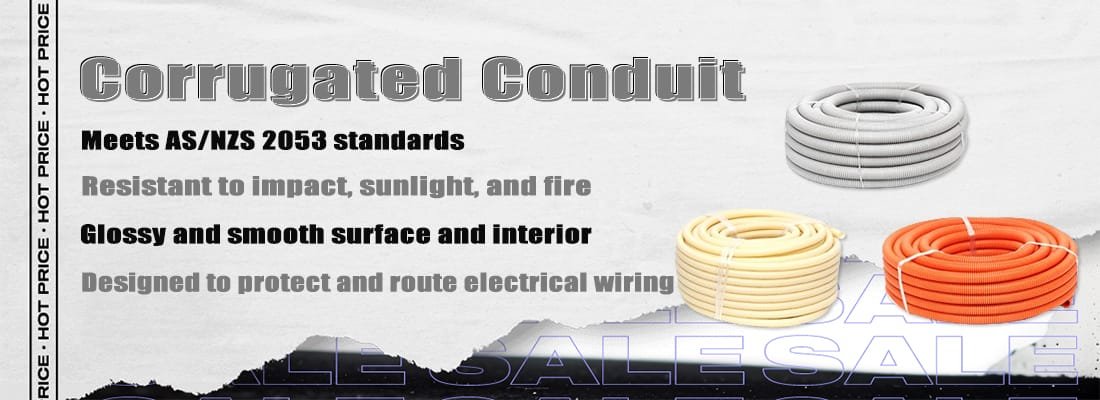
Here are some key points about corrugated conduit:
Corrugated conduit, also known as flexible conduit or flexible tubing, is a type of electrical conduit made up of a series of corrugated, flexible metal or plastic tubes. The corrugations allow the conduit to bend and flex more easily compared to rigid conduit.
Some common features and uses of corrugated conduit:
Flexibility – The corrugated design makes it easier to route the conduit around obstacles and bends compared to rigid conduit. This makes it useful for applications with space constraints.
Weatherproofing – Corrugated conduit provides a durable, weather-resistant enclosure for wiring, especially when used outdoors. The corrugations help protect against abrasion and impact.
Reduced installation time – The flexibility of corrugated conduit can speed up the installation process compared to rigid conduit.
Electrical and mechanical applications – Corrugated conduit is used to protect and route wires, cables, and tubing in both electrical and mechanical systems.
Common materials – Corrugated conduit is commonly made from galvanized steel, aluminum, or various types of plastic like PVC.
Size range – Corrugated conduit is available in a wide range of diameters, typically from 1/2 inch up to several inches.
The flexibility and protective qualities of corrugated conduit make it a popular choice in many construction, industrial, and infrastructure applications where wiring and cabling needs to be routed through tight or changing spaces.
This Corrugated Conduits has some additional features and uses:
Corrosion resistance: This kind of conduit has excellent corrosion resistance and can be used for a long time in harsh environments, such as chemical plants, marine environments, etc. This is due to its material, such as stainless steel, PVC, etc.
Thermal insulation/insulation: corrugated conduit can insulate and provide insulating protection for wires and cables from the effects of ambient temperature. This is particularly useful in industrial or high temperature environments.
Shock resistance: The flexibility of the conduit can absorb a certain degree of vibration and vibration, protecting the sensitive electronic equipment inside. This is valuable in automobiles, machinery and equipment, etc.
Easy to connect: corrugated conduit usually has various accessories and connectors, such as elbows, tees, etc., to facilitate quick connection and branch wiring. This increases installation flexibility.
Aesthetics: The shape design of the hose type conduit is relatively beautiful, and it has good visual effects in some commercial or household situations.
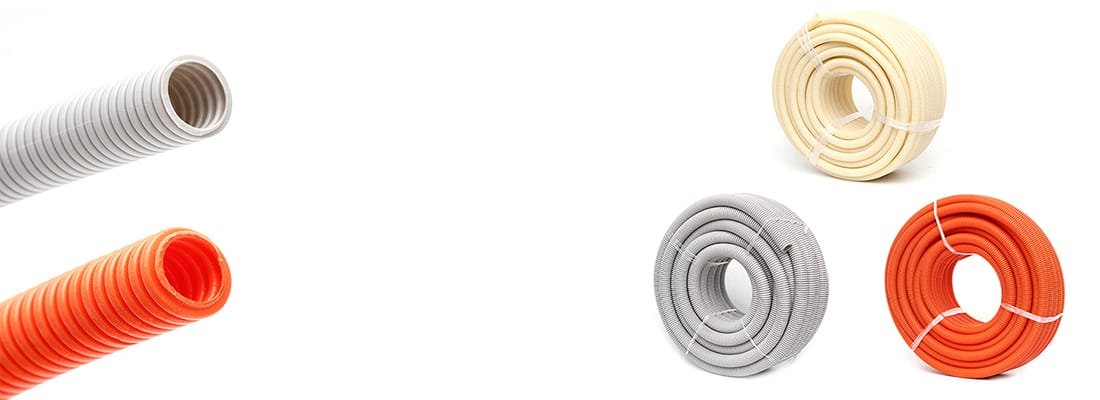
Corrugated conduit has many common application scenarios, including the following:
Industrial environment
Wire and pipeline laying in factory workshops, warehouses and other places
Cable protection for mechanical equipment and automation systems
Wiring in high temperature and humid environments in chemical, petroleum and other industries
Architecture/Construction Field
Indoor and outdoor wiring for commercial buildings and residences
Cable protection in underground pipelines and tunnel projects
Power and communication lines for infrastructure such as roads and railways
Transportation industry
Cable wiring for mobile equipment such as automobiles and ships
Cable laying in aerospace industry
Home/Office Applications
Hidden wiring of wires, network cables, etc. in home decoration
Beautifying management of office or home equipment cables
Medical/Laboratory Environment
Cable protection for hospital equipment
Special cable laying in laboratories and clean rooms
In short, corrugated conduit has a wide range of practical applications in industrial control, infrastructure facilities, building decoration and other fields due to its flexibility, durability and protective performance advantages. Choosing appropriate materials and sizes can well meet the wiring needs in different scenarios.
The installation steps of Corrugated conduit mainly include the following key steps:
Measure and cut
Measure the required length of conduit according to actual needs.
Use a tool such as a pipe cutter or saw to cut the conduit to the appropriate length.
Connection accessories
Select appropriate elbows, tees and other connectors according to the wiring path.
Connect these accessories to the conduit by snapping or threading.
Fixed installation
Use special clamps or brackets to fix the conduit on the wall, ceiling, etc. along the designated path.
Make sure the conduit is firmly fixed and will not be displaced due to external force.
Incoming cable
Thread the wires, optical cables and other cables into the conduit in sequence.
Tools such as wire guides or straps can be used to assist in threading the cables.
Sealing
Use waterproof sealing rings or filled sealants at both ends of the conduit and at the connection points with accessories.
Make sure the entire system is well sealed to prevent moisture from entering.
Inspection and acceptance
Carefully check the entire installation process to ensure that all components are firmly connected and cables are laid neatly.
Power on and check the operation to ensure safe and reliable operation of the system.
During the installation of corrugated conduit, you need to pay attention to the following safety regulations:
Personal safety protection
Wear personal protective equipment such as hard hats, gloves, and goggles.
Use safety tools such as pipe cutters, wrenches, etc. to avoid injury.
Pay attention to hand safety during operation and be careful of dangers such as cutting and squeezing.
Electrical Safety
Before installing electrical cables, make sure the power supply is completely shut off.
Follow relevant electrical safety regulations to avoid the risk of electric shock.
Grounding and insulation treatment must be in place to prevent accidents such as leakage and short circuit.
Safe working environment
Make sure the work area has enough space and is free of obstacles.
Keep the floor dry and clean to avoid slipping and falling accidents.
Pay attention to safety isolation measures when pipelines cross passages.
Fire prevention
Select qualified flame retardant conduit material and comply with fire protection standards.
Keep away from open flames and high temperature sources to avoid excessive heating of the conduit.
Insulate and fire-proof cables.
Load-bearing stability
Reasonably select the conduit size and fixation method to ensure sufficient strength.
For situations prone to vibration shock, strengthen fixing measures.
Avoid excessive bending or flattening of the conduit, which will affect the load-bearing capacity.
Environmental adaptability
For harsh environments such as moisture and chemical corrosion, choose appropriate conduit materials.
Carry out sealing treatments such as waterproofing and anti-corrosion to ensure safe and reliable use.
Regularly check the conduit status and take timely measures if any problems are found.